
Area Rug Care Questions, Answered by a KC Pro
How professional rug cleaning works in Kansas City: fiber identification, dye testing, in-home service, honest pricing, and how long your rug takes to dry.
By Rick Long, Owner · Updated October 26, 2026
Key takeaways
- Most area rugs in the Kansas City metro can be cleaned right in your home. R&L has worked that way since 1991, with no travel surcharge anywhere in the metro.
- An area rug is not wall-to-wall carpet: fiber content, dye stability, backing, and fringe all change how it has to be cleaned.
- Professional rug cleaning starts with fiber identification and a colorfastness test, never with soap and water.
- Most rugs are dry within 4 to 8 hours of professional cleaning, depending on fiber, pile depth, and airflow.
- Rug cleaning quotes depend on size, fiber, and condition. R&L estimates are free and the quote you get is the price you pay.
Why Do Area Rugs Need Different Cleaning Than Wall-to-Wall Carpet?
Direct answer
Because a rug is a complete textile, not just pile. Fiber content, dye stability, backing construction, and fringe all vary from rug to rug, and the wrong method can bleed dyes, shrink wool, or wreck a backing. Professional rug cleaning starts by identifying what the rug is made of, then matches the method to it.
Wall-to-wall carpet in the Kansas City metro is fairly predictable. Most of it is nylon or polyester stretched over a pad, and it tolerates hot water extraction without complaint. Area rugs are a different animal. The rug in your living room might be machine-made polypropylene, hand-knotted wool, viscose that water-spots if you look at it wrong, or a cotton flat-weave that shrinks when it gets overwet. The dyes vary just as much. Some are locked in and colorfast. Others will migrate the first time an aggressive cleaner touches them, which is how a cream field ends up with a pink halo around every red medallion. Backings and fringe add two more variables that carpet simply does not have. Rick has cleaned rugs across the metro since 1991, and the first lesson of all that experience is blunt: the method has to fit the rug, not the other way around. That is the whole difference between a rug that comes back brighter and a rug that comes back ruined.
How Does Professional Rug Cleaning Actually Work?
Direct answer
In five stages: identify the fibers, test the dyes for colorfastness, pre-treat spots and pet accidents, deep-clean with a method matched to the rug, then groom the pile and square the fringe. Delicate wool and hand-knotted rugs get low-moisture care that protects their colors, texture, and value.
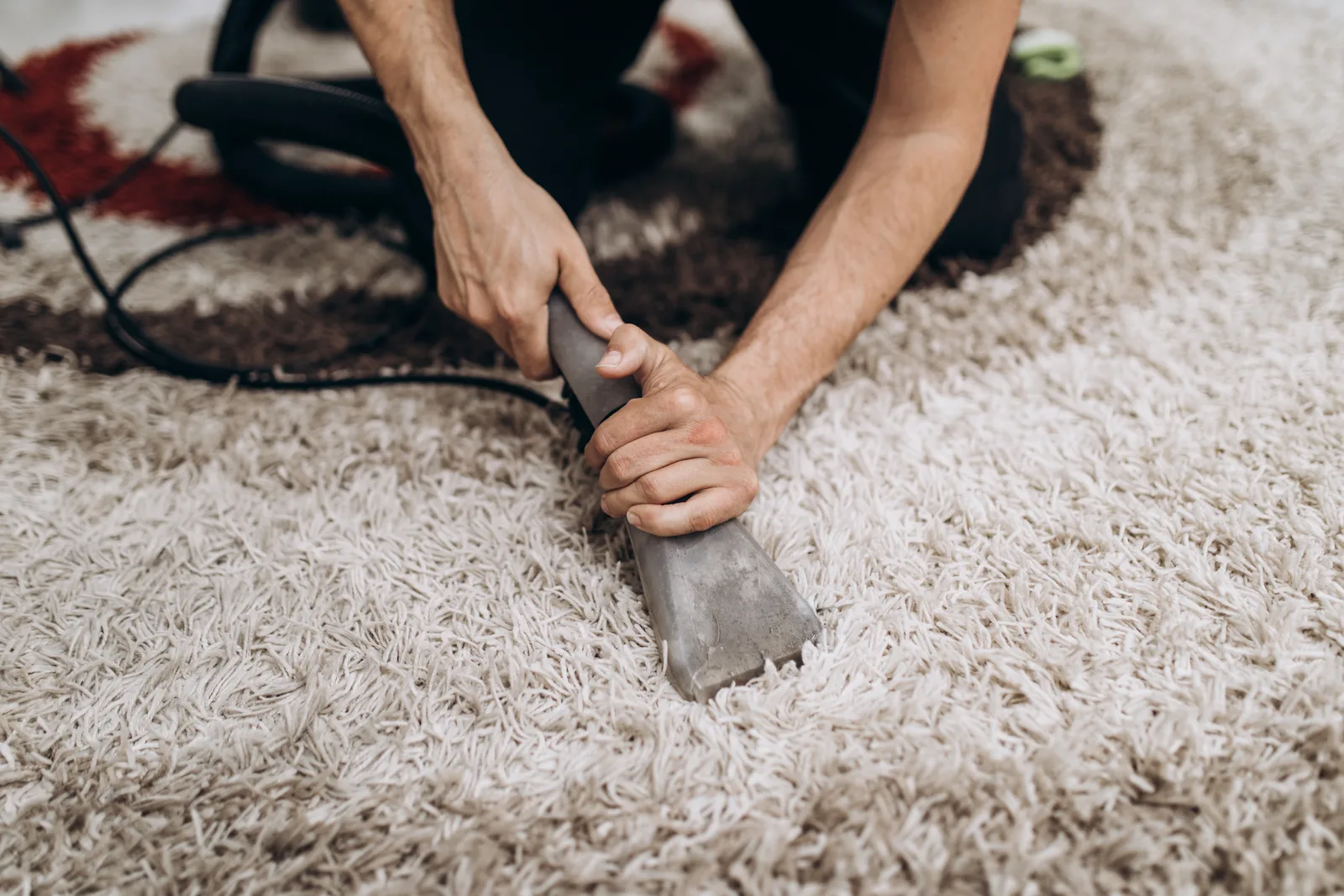
The job starts before any cleaning agent comes out of the truck. First we identify the fiber, because wool, synthetics, cotton, and blends each set the rules for everything that follows. Second, we test the dyes for colorfastness in a spot you will never notice. If a dye is unstable, that finding changes the chemistry and the moisture level for the entire job. Third, spots and pet accidents get pre-treated, since a stain that has had weeks to set needs targeted work before the main clean. Fourth comes the deep clean itself. Sturdy synthetics can take a thorough extraction. Wool and hand-knotted pieces get a gentler, low-moisture approach. Fifth, we groom the pile so it dries lying the right direction, and we square the fringe so the rug looks finished, not just clean. None of this is exotic. It is the discipline of doing each step in order, every time, which is what IICRC certification trains for and what three and a half decades of Kansas City rugs have drilled into Rick.
Booking details, the rugs Rick takes on and the free estimate are all on the page for rug cleaning in Kansas City.
Which Types of Area Rugs Can Be Professionally Cleaned?
Direct answer
Nearly all of them: synthetic and indoor-outdoor rugs, machine-made and hand-knotted wool, Oriental and Persian rugs, shag and high-pile rugs, braided and flat-weave construction, plus runners and entry mats. The method changes with the rug, and honest fiber identification up front is what keeps each one safe.
The everyday synthetics that cover most KC living rooms clean up beautifully, and they usually look dramatically better afterward because light, solid colors show soil early. Wool rugs, from machine-made to hand-knotted, want gentler chemistry and less moisture, and they reward that care by lasting for decades. Oriental and Persian rugs raise the dye questions we test for, which is exactly why the colorfastness check comes before anything wet. Shag and high-pile rugs hide an astonishing amount of dry soil deep in the pile, so they feel gritty long before they look dirty. Braided rugs, flat-weaves, runners, and the entry mats that catch everything Missouri weather drags in round out the list. One caution worth naming: rugs labeled viscose, art silk, or bamboo silk are the most fragile pieces we see, and they are exactly the ones a big-box cleaner is most likely to damage, so tell us up front if you suspect yours is one of them. Many customers also have us clean area rugs during the same visit as their carpet or upholstery, which is the most efficient way to get a whole room done. If you have a wool or Oriental piece with real sentimental or dollar value and you are worried it is past saving, we wrote a separate honest guide on when a wool or Oriental rug can be saved, and the related links below will take you to it. The short version: ask us before you retire the rug.
Do You Have to Send Your Rug Away to Have It Cleaned?
Direct answer
In most cases, no. Rick cleans most area rugs right in your home, anywhere in the Independence and Kansas City metro, with no travel surcharge. That means no rolling the rug up, no hauling it across town, and no bare floor for weeks while you wait for it to come back.
Some rug companies run a central plant, so every job means the rug leaves your house and comes back weeks later. R&L works the other way. We come to you, clean the rug where it lives, and it is back in service the same day it dries. For most rugs, most of the time, in-home cleaning delivers everything the rug needs: fiber-matched chemistry, thorough extraction, groomed pile, squared fringe. For the rare rug that needs more than an in-home visit, a badly pet-saturated piece for example, we say so plainly during the free estimate and walk you through the best plan instead of forcing a one-size answer. We compared the two approaches in detail in our in-home versus drop-off rug cleaning guide, linked below, including the situations where each one genuinely makes sense. What we will not do is make your rug disappear for three weeks by default.
The same in-home visit can cover the couch too. See our Upholstery Cleaning Kansas City page for how that works.
How Often Should an Area Rug Be Cleaned in a Kansas City Home?
Direct answer
Every 12 to 18 months for most households, and closer to every 6 to 12 months with pets, kids, or heavy traffic. Kansas City pushes rugs toward the shorter end of the range: humid summers help soil and odors bind to fibers, and gritty winters grind abrasive soil into the pile.
A rug earns its keep by catching what would otherwise reach your floors: tracked-in grit, pet hair, spills, and the fine dust a furnace circulates all winter. That is the job, and it means soil builds whether or not the rug looks dirty. Kansas City adds its own pressure. Summer humidity helps soil bond to fibers and gives odors, especially pet odors, a noticeable boost on muggy days. Winter tracks in ice-melt residue and grit that settles deep into the pile and abrades the fibers every time someone walks across it. Entry rugs and hallway runners carry the heaviest load and need attention most often, while a bedroom rug can stretch longer. If a rug doubles as a pet bed, shorten the interval the same way you would for a pet household couch. The practical test we give customers is simple: rub your hand across the pile in the walking lane, then in a corner nobody steps on. If the two feel or look different, the rug is due. And whatever the calendar says, clean a rug promptly after any pet accident, because waiting is what turns a surface stain into a backing problem.
How Much Does Rug Cleaning Cost in Kansas City?
Direct answer
It depends on the rug’s size, fiber, and condition, which is why honest companies quote per rug instead of posting one flat number. R&L estimates are free, the quote you get is the price you pay, and there is no travel surcharge anywhere in our Kansas City metro service area.
Three things drive a rug cleaning quote. Size is the obvious one, since a 9 by 12 takes more time and more solution than a runner. Fiber is the second: wool and delicate fibers need gentler chemistry and a more careful pace than sturdy synthetics. Condition is the third: a lightly soiled rug on a regular schedule is a quicker job than a rug with set-in pet stains that needs enzyme treatment and extra extraction passes. When you shop around, be wary of two pricing patterns. Rock-bottom teaser prices tend to grow once a crew is standing in your living room, and a company that cannot quote without pressure tactics is selling something other than cleaning. Our approach is simpler. Call (816) 836-1767 with the rug’s approximate size, and the fiber if you know it, and we can usually quote it on the spot. The estimate costs nothing, and since 1991 the number we quote has been the number on the invoice.
How Long Does an Area Rug Take to Dry?
Direct answer
Most rugs are dry within 4 to 8 hours of professional cleaning, depending on fiber, pile depth, and airflow. Thorough extraction during the clean is what keeps drying fast, and a ceiling fan or a running air conditioner shortens it further.
Dry time is mostly decided during the cleaning, not after it. The more moisture extracted at the end of the job, the less is left to evaporate, which is why professional extraction dries in hours while a rental machine can leave a rug damp for days. Fiber matters too: synthetics release water quickly, wool holds it longer, and a deep shag pile holds more than a flat-weave. Season changes the picture in Kansas City. In July, run the air conditioning rather than opening a window, because the outdoor air is already carrying all the moisture it can hold. In winter, furnace air is so dry that rugs finish faster than most people expect. While the rug dries, keep foot traffic and pets off it, and wait until it is fully dry before the furniture goes back. If a rug is still damp well past the expected window, call us. Slow drying is usually an airflow problem, and occasionally a sign a rug was overwet somewhere along the line, which is exactly what disciplined extraction exists to prevent.
Carpet in the same room due as well? See our Carpet Cleaning Kansas City MO page, and both can be done on one visit.